

Four Key Factors for Maintaining the Reliability of LiBr Absorption Unit
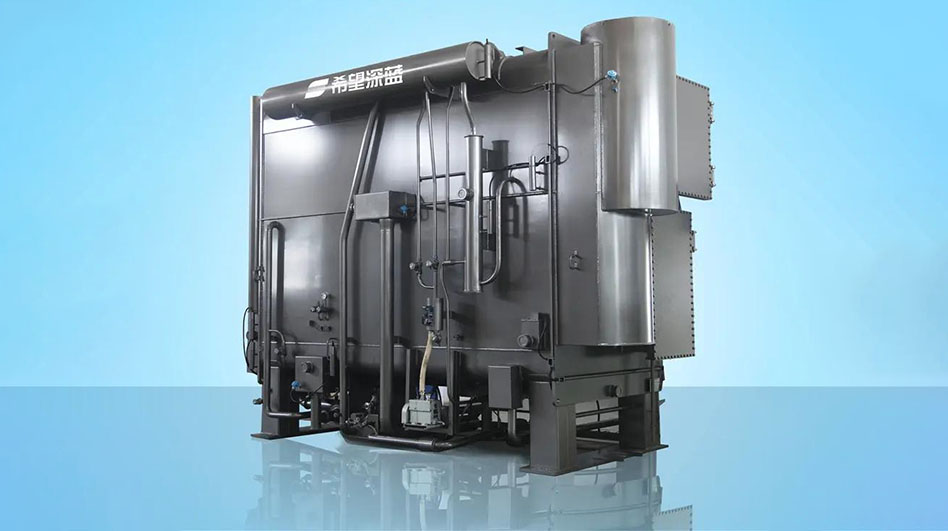
LiBr absorption unit, serving as energy-saving solutions that utilize industrial waste heat, rely on stable operation for their effectiveness. As Hope Deepblue, with years of expertise in the lithium bromide absorption chiller/pump field, we deeply understand that ensuring long-term and stable operation depends on effectively managing the following four core factors.
1. Absolute Air Tightness
Air tightness is the foundation of the unit's reliability. If air leaks into the unit, oxygen can cause corrosion and generate non-condensable gas. These gas act like an "insulating blanket" covering the heat exchange tubes, leading to drop in cooling capacity and a significant increase in energy waste Hope Deepblue's LiBr absorption units incorporate advanced welding techniques and sealing technologies from the initial design stage, along with efficient auto-purge systems. This builds a solid vacuum defense for the unit, ensuring long-term stability from the first critical step.
2. Preventing Refrigerant Water Pollution
Refrigerant water pollution occurs when the lithium bromide solution mixes into the refrigerant water. This raises the evaporation temperature of the refrigerant water and reduces its cooling capacity. This issue usually stems from failures in mechanical seals or level controls.Based on proven project expertise, Hope Deepblue ensures the refrigerant water remains pure through a simple and efficient regeneration process design, maintaining strong and stable cooling performance.
3. Mitigating Cooling Capacity Decay
Cooling capacity decay is the comprehensive manifestation of the unit's gradual decline in cooling capacity. Its primary causes are precisely poor air tightness and refrigerant contamination, alongside other factors like degradation of solution performance and scaling on heat exchange tubes. Hope Deepblue not only provides high-performance units but also offers professional solution analysis and after-sales support. Combined with intelligent control systems that monitor operating parameters in real-time, we effectively slow down performance decay, helping users maintain efficient operation and management of their equipment.
4. Preventing and Handling Crystallization
Crystallization is a typical fault where lithium bromide solids separate from the solution, blocking pipes and heat exchangers. It often occurs during shutdown or under sudden changes in operating conditions. The control system in Hope Deepblue's units features built-in automatic de-crystallization device. This system smoothly handles operational fluctuations and automatically executes a diluted operation during shutdown, fundamentally reducing the risk.
Hope Deepblue, with solid craftsmanship, intelligent controls, and professional services, precisely manages every aspect from air tightness to crystallization prevention. We are committed to providing a stable, efficient, and worry-free lithium bromide absorption chiller for your project.
Post time: Nov-07-2025


