

Hope Deepblue’s Technology Department Conducts Hands-On AutoCAD Mechanical Design Training
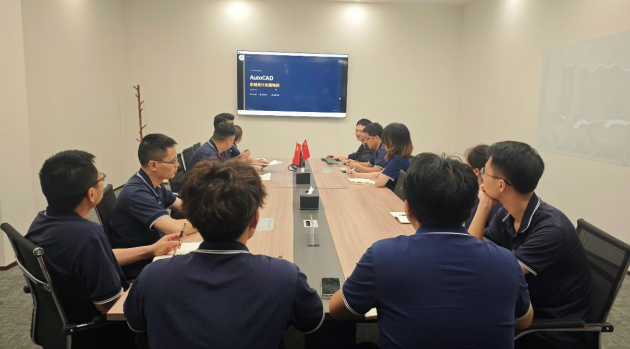
To continuously improve the accuracy and efficiency of structural design for LiBr absorption units and strengthen the professional foundation of the Structural Design Team within the Technology Department, the Structural Design Team recently organized a specialized hands-on training session on AutoCAD mechanical design. The structural design of LiBr absorption units is a core element in ensuring stable and efficient unit performance. From the high-pressure generator, heat exchanger, and tube plate to the overall unit frame and piping layout, the precision of every detail in the drawings directly impacts subsequent production and assembly, unit commissioning, and even the reliability of long-term operation. As the core tool for structural design, proficiency in AutoCAD directly determines design efficiency and the degree of drawing standardization. This training closely focused on real-world scenarios in LiBr absorption unit structural design, deeply integrating CAD tool applications with product design pain points, with the aim of driving dual improvements in design quality and production coordination efficiency through skill enhancement.
At the same time, the training focuses on the most common challenges faced by the structural design team in LiBr absorption unit design. Centering on three core difficulties—drawing efficiency bottlenecks, handling of detail errors, and the representation of complex structures—it dissects the root causes of these issues using real-world project examples and shares practical solutions and techniques: To address the long drawing cycles and high volume of repetitive tasks associated with large-scale unit assembly drawings, the training explains the efficient use of standard part block libraries, external references, and template-based design; To address detail errors such as dimensioning conflicts, non-standard expression of geometric tolerances, and potential assembly interference, the session used real-world drawing examples—such as cylinder tube sheets and piping supports—to demonstrate how to proactively avoid oversights by utilizing CAD features like object snap and parametric constraints; To address the challenges posed by dense internal piping and complex structural hierarchies, the session shared techniques for combining sectional views, detailed close-ups, and layer planning to make complex structural relationships clear and easy to understand, thereby effectively reducing cross-departmental communication costs.
Moving forward, we hope that Hope Deepblue’s Technical Department will continue to focus on key aspects of unit design, R&D, and manufacturing, conducting more targeted specialized skills training to drive the continuous enhancement of the technical team’s professional capabilities. With solid technical expertise and a rigorous approach to design, the department will provide robust support for the company’s innovative development in the fields of absorption refrigeration and industrial waste heat utilization, helping to continuously optimize and upgrade the performance of units and create greater value for customers.
Post time: Jul-15-2026


