

LiBr Absorption Chillers: Energy-saving and Eco-friendly Modern Refrigeration Equipment
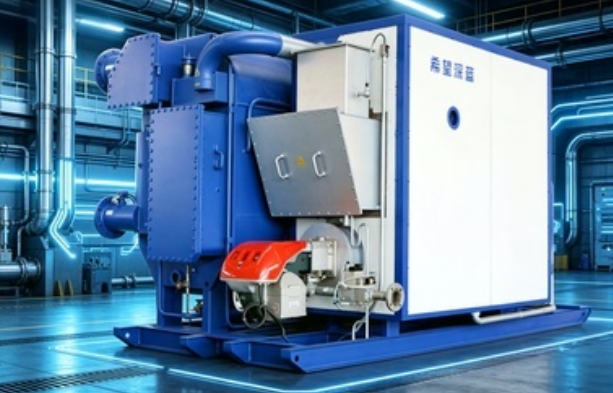
Refrigeration technology is widely applied in industrial production, large-scale buildings and public venues. Conventional refrigeration equipment mostly uses refrigerant such as freon and relies on electrically driven compressors to realize heat exchange. As a distinctive type of refrigeration equipment, LiBr absorption chillers adopt innovative working media and driving modes. Featuring environmental friendliness and high energy efficiency, they are extensively used for waste heat recovery and centralized cooling, and are classified into water-cooled and air-cooled types according to heat dissipation modes.
Different from traditional refrigeration units, LiBr absorption chillers eliminate the use of freon and adopt a dual working medium system composed of water and lithium bromide aqueous solution. Pure water serves as the refrigerant. Maintained under a high vacuum, water evaporates easily at low pressure and absorbs heat to produce cooling effect. Concentrated lithium bromide solution acts as the absorbent, which can efficiently absorb water vapor to ensure stable operation of the circulation system. Driven by heat sources including steam, hot water and industrial waste heat, the equipment greatly cuts power consumption and enables diversified and eco-friendly energy utilization.
Continuous refrigeration is achieved through a closed-loop cycle. In the evaporator, chilled water evaporates under low pressure to produce cold water for cooling supply. The generated water vapor flows into the absorber and is absorbed by concentrated lithium bromide solution, which then turns into dilute solution. The diluted solution is delivered to the generator by pumps and heated by external heat sources. Water in the solution vaporizes and is separated out, while the lithium bromide solution is reconcentrated. The water vapor enters the condenser, condenses into liquid water and flows back to the evaporator, and the concentrated solution returns to the absorber. The cycle runs continuously to deliver stable cooling capacity. With few moving parts, the chiller operates quietly with low vibration.
In terms of heat dissipation, the equipment is divided into water-cooled and air-cooled models. Water-cooled chillers dissipate heat via cooling water and cooling towers. With high heat dissipation efficiency and stable performance, they are the mainstream products, ideal for large facilities with stable water supply such as industrial parks, commercial complexes, hospitals and data centers. Air-cooled chillers require no cooling water systems or cooling towers and dissipate heat through fan convection. They are easy to install and free from water source restrictions, making them suitable for water-scarce areas, medium and small buildings and temporary cooling projects. Their cooling capacity will slightly decline under high ambient temperatures.
Compared with freon-based traditional units, lithium bromide absorption chillers deliver outstanding environmental performance. The adopted working media are non-toxic and pollution-free, causing no damage to the atmosphere. Capable of fully reusing low-grade waste heat, the equipment achieves remarkable energy-saving effects. Operating under negative pressure, the units pose no risk of combustion or explosion and feature high safety. They also have a wide cooling capacity adjustment range to adapt to varying operating conditions. Nevertheless, lithium bromide solution is corrosive, so the chillers require strict airtightness. During operation, temperature and solution concentration must be precisely controlled to prevent crystallization.
Against the backdrop of energy conservation and carbon emission reduction, lithium bromide absorption chillers have become the preferred choice for industrial energy-saving renovation and centralized cooling. With respective advantages, water-cooled and air-cooled models can be selected based on on-site conditions. Complementary to traditional freon refrigeration equipment, they play an irreplaceable role in the modern refrigeration industry.
Post time: Jun-12-2026


