

Solution Impurities and Filtration System of Lithium Bromide Units
In industrial refrigeration, LiBr absorption chillers are widely used in chemical, new energy, steel, oilfield and biopharmaceutical industries due to their high waste heat utilization rate, stable operation and strong environmental adaptability. As the core working medium for unit refrigeration cycles, LiBr solution is regarded as the “blood” of the equipment. Its cleanliness directly determines the chiller’s refrigeration efficiency, operational stability and overall service life. During long-term operation, all kinds of impurities will continuously accumulate in the solution. Without timely and effective purification, these contaminants will cause rising energy consumption, reduced refrigeration capacity, equipment corrosion and pipeline blockage, seriously undermining the overall operating performance of the unit.
Solution impurities are generated throughout the full lifecycle of the equipment, stemming from equipment manufacturing, field installation, long-term operation, external environmental intrusion and medium aging. New units inevitably contain residual contaminants after welding, pipeline processing, pickling and passivation. Common residual impurities include welding slag, metal oxide scale, rust and metal debris inside unit shells, heat exchange tubes and circulating pipelines. In addition, oil stains, sealant particles, dust and thermal insulation residues left during installation will mix into the solution after liquid filling, which is the main cause of solution turbidity in the initial operation stage of new equipment.
Long-term operational corrosion is the leading source of persistent impurities. LiBr solution is strongly alkaline, and units continuously operate under harsh conditions of high temperature, high vacuum and alternating cold and heat. Such operating environments trigger subtle electrochemical corrosion and oxidation on carbon steel structures and copper heat exchange components, producing fine iron oxide, copper oxide and metal hydroxide particles. Even with professional corrosion inhibitors added, trace corrosion cannot be completely avoided. These suspended fine particles gradually darken and cloud the solution, leading to continuous deterioration of solution quality during long-term operation.
External environmental factors also contribute to solution contamination. Slight vacuum leakage and aging sealing components allow air, water vapor and dust to penetrate into the unit. Oxygen and carbon dioxide in the air react chemically with the LiBr solution, forming carbonate substances and flocculent sediments. Non-standard maintenance and liquid replenishment operations may also introduce external impurities. This contamination risk is particularly prominent in windy and dusty regions such as Xinjiang and Northwest China.
Moreover, unstable operating conditions will accelerate solution deterioration and impurity generation. Fluctuating unit loads, abnormal temperatures and unbalanced solution concentration easily cause local over-concentration and crystalline precipitation. Meanwhile, long-term cyclic operation gradually consumes and degrades functional additives including corrosion inhibitors and defoamers, producing colloidal impurities and flocculent deposits that further weaken solution performance and heat transfer efficiency.
Solution impurities act as invisible hazards that severely restrict unit operation. Accumulated contaminants block heat exchange tubes, spray nozzles and circulating pipelines, resulting in poor solution circulation, reduced refrigeration output and higher energy consumption. Suspended metal particles intensify equipment wear and electrochemical corrosion, accelerating component aging and shortening equipment service life. Furthermore, impurities damage the stable physicochemical properties of the solution, weaken its absorption and refrigeration capacity, and easily cause pipeline crystallization, blockage and unexpected shutdowns, disturbing enterprises’ continuous and stable production.
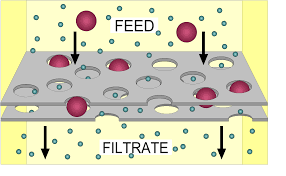
The LiBr solution filter is an indispensable core device to control impurities and ensure reliable unit operation, serving as the key purification barrier for the circulating system. Installed in series on the solution circulation pipeline, the filter realizes unmanned online filtration under the pressure of the circulating pump. It efficiently intercepts metal debris, oxide contaminants, flocculent sediments and crystalline particles through high-precision filter screens. The purified solution returns to the circulating system, while trapped impurities are stored inside the filter for regular cleaning, requiring no equipment shutdown or production interruption.
High-quality solution filters are professionally customized for LiBr absorption unit working conditions, adopting strong alkali-resistant and corrosion-resistant materials to adapt to long-term cyclic operation. Equipped with high-precision encrypted filter screens, the equipment efficiently captures micron-level fine impurities with high flux and low blockage risk. Its optimized structural design enables convenient disassembly, cleaning and maintenance, effectively reducing daily operation and maintenance costs, and fully meeting the 24-hour continuous operation requirements of industrial units.
Hope Deepblue Air Conditioning Manufacturer. specializes in the R&D and manufacturing of high-performance LiBr absorption units. All product series are standardly equipped with high-precision solution filtration systems. Backed by mature manufacturing technology, strict quality control standards and a comprehensive operation and maintenance system, the company effectively guarantees long-term solution cleanliness and operational stability. Adhering to rigorous manufacturing concepts, Hope Deepblue enables every unit to maintain efficient, energy-saving and stable operation under complex industrial working conditions, providing reliable and professional refrigeration equipment and operation guarantee for various industrial enterprises.
Post time: May-29-2026


