

Why Do LiBr Absorption Chillers Require Very Little Electricity?
The fundamental reason why LiBr absorption chillers require very little electricity is that their cooling principle is entirely different from that of traditional electric refrigeration (such as home air conditioners and cold storage facilities).
Simply put, traditional electric refrigeration operates by using “electricity to drive a compressor,” while absorption chiller primarily operates by using “thermal energy.” Electricity plays only a negligible supporting role here.
The specific differences are as follows:
Different drive mechanisms: In traditional electric refrigeration, the compressor is the system’s “biggest power consumer,” requiring a significant amount of electricity. In contrast, the core driving energy for absorption chiller is thermal energy (such as natural gas combustion, industrial waste heat, hot water), which uses heat instead of electricity to perform the primary task of generating cooling capacity.
The only components that use electricity are pumps and some small electrical devices: Absorption chillers do contain motors, but these do not drive large compressors; instead, they power several low-power solution pumps and refrigerant pumps. Their sole function is to transport liquids from one location to another, with power ratings ranging from a few kilowatts to several dozen kilowatts—far less than the hundreds of kilowatts required by a compressor to achieve the same cooling capacity.
You can think of it as “using a water pump to create a head, which turns a water wheel.” The pump (powered by electricity) only needs to lift the water to a higher elevation, while the water wheel (equivalent to the refrigeration process) relies on the water’s gravitational potential energy to keep turning. The electricity consumed by the pump is much less than what would be required to directly power the water wheel.
Precisely because LiBr absorption chillers primarily “consume” thermal energy (waste heat, natural gas) and use only a small amount of electricity, they are particularly well-suited for applications with excess heat (such as chemical plants and power plants) or abundant natural gas resources, significantly reducing overall electricity costs.
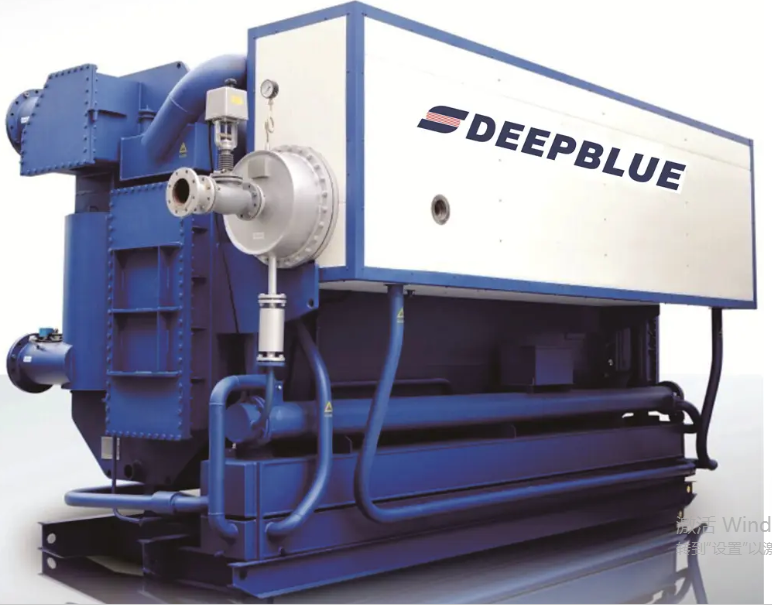
Post time: Jun-04-2026


